
Summer internship takes DSU student Troy Sessions to the bottom of the Grand Canyon
September 3, 2026
MADISON, S.D. – For Dakota State University senior Troy Sessions, a summer internship meant trading a traditional office setting for a workplace at the bottom of the Grand Canyon.
Sessions, a computer information systems major specializing in project management, spent much of the summer working in Supai, Ariz., home of the Havasupai Tribe. The remote community is accessible primarily by an eight-mile trail or helicopter.
“It was definitely a whole different world when I got down there,” Sessions said.
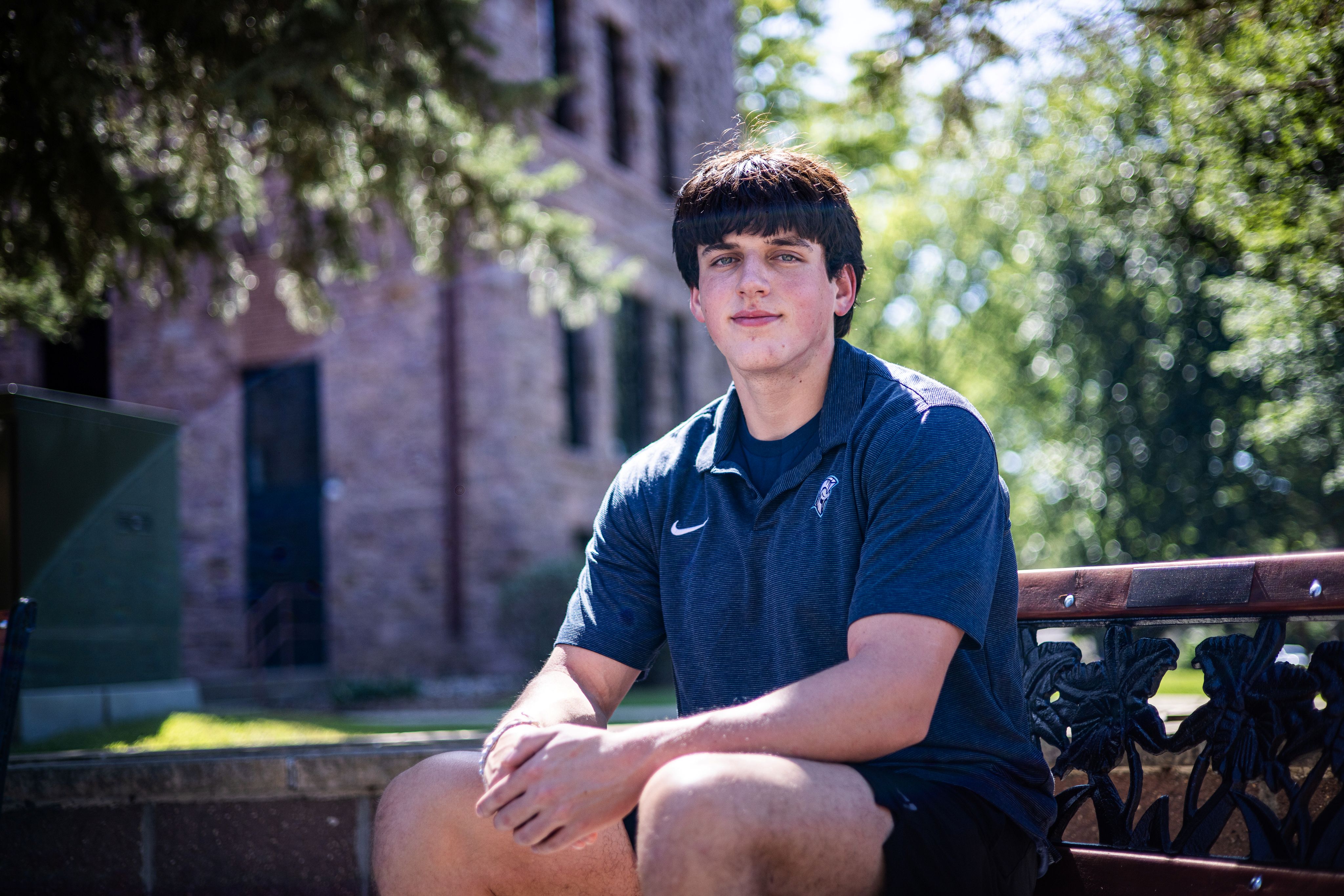
DSU senior Troy Sessions interned at the bottom of the Grand Canyon this summer.
Originally from Williams, Arizona, Sessions lived in Japan for 11 years while his mother worked as a counselor for military families. She later accepted a position at the elementary school in Supai, about 30 minutes from the Grand Canyon’s South Rim.
Sessions initially planned to intern at the elementary school. When the required background check took longer than anticipated, the director of the community’s Head Start program learned about his technology skills and hired him to help modernize its operations.
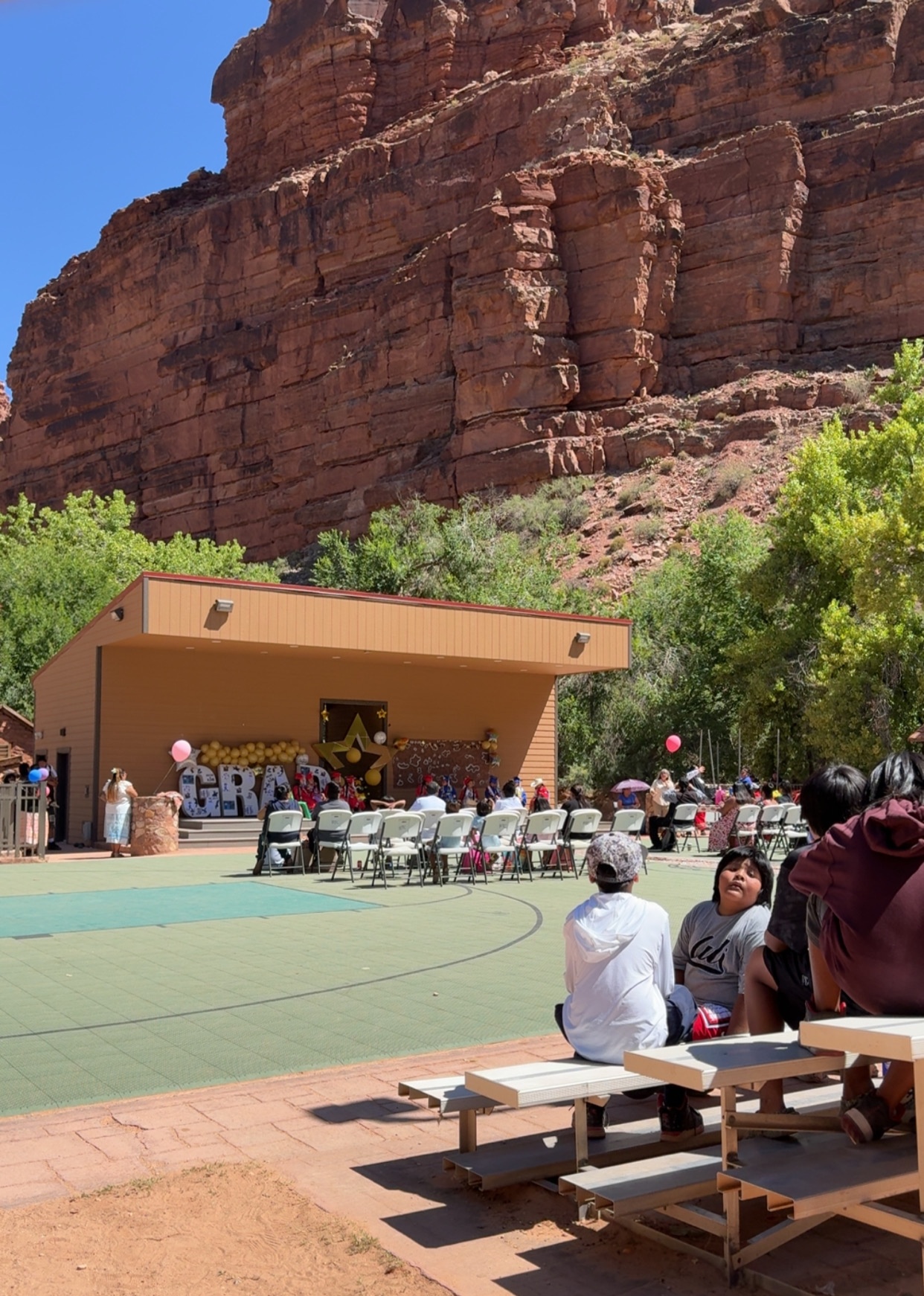
The community center in Supai, Ariz.
From mid-May through the end of July, Sessions worked both in Supai and remotely. His primary projects included creating an inventory-tracking system, configuring laptops, connecting computers and printers, establishing a separate network for the Head Start program, and converting paper forms into fillable digital documents.
Sessions drew directly from the skills he developed at DSU, particularly those learned in database and project management courses.
“The internship definitely helped me realize that I want to do something with project management,” he said. “I really liked having my own pace, managing everything, getting it set up, and presenting it to my boss.”
After completing his initial assignments, Sessions expanded his work throughout the community, helping older residents set up computers and other technology in their homes.
The experience introduced Sessions to the unique challenges of providing technology services in one of the country’s most isolated communities. Supai has limited services, and supplies, groceries, and mail are commonly transported into the canyon by mule. Bringing in contractors can be difficult because they must hike or fly into the village and may only be available for a limited time.
“Anything that I could do while I was there, I did,” Sessions said. “I have the knowledge to do things that many people don’t have the knowledge to do, and so I just did them.”
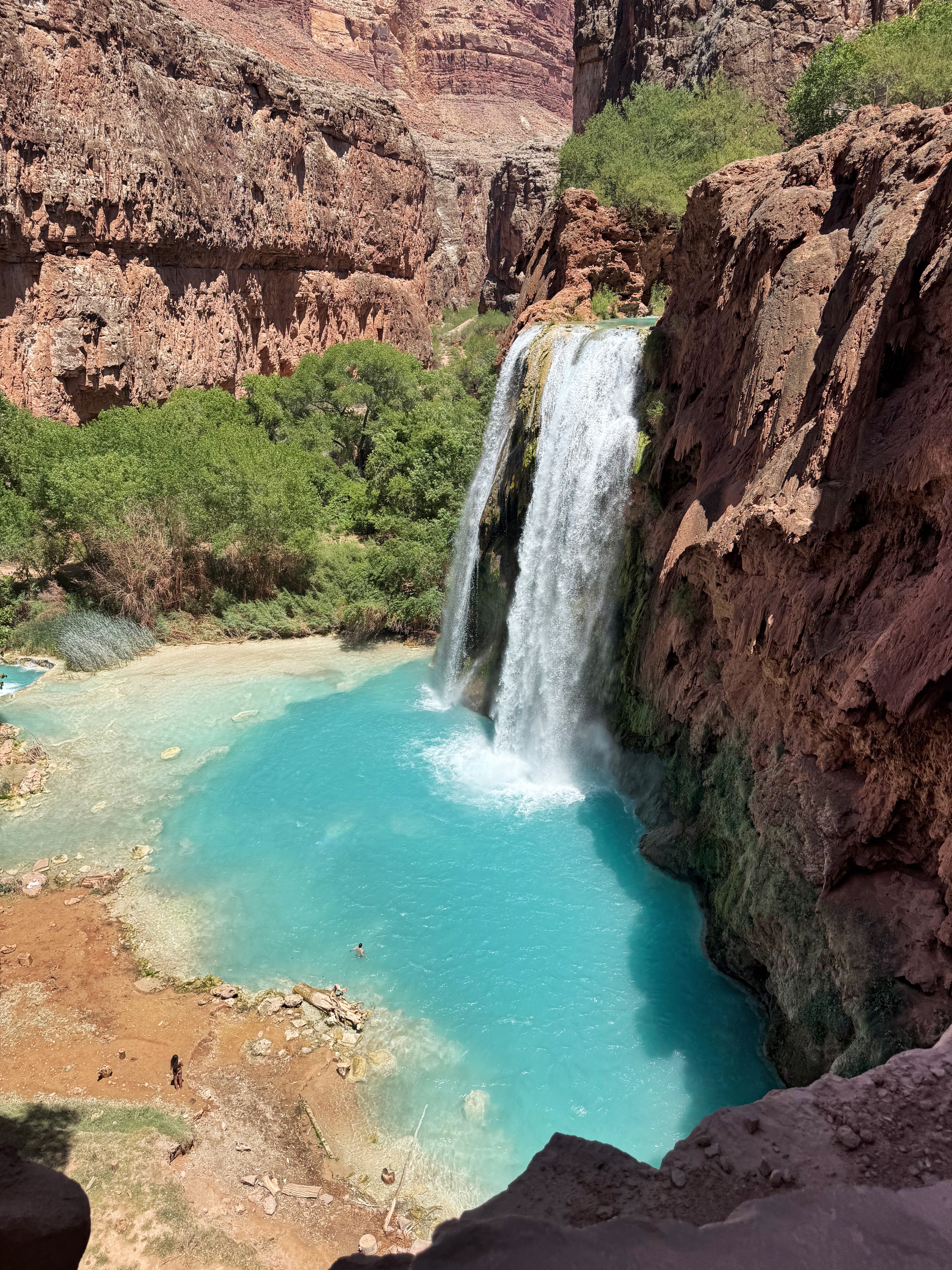
Mooney Falls near Supai, Arizona.
Sessions also learned about plans to install fiber connections for homes in the community. Although the project was still in its early stages, he spoke with tribal information technology staff about the logistics of installing and maintaining equipment across the rugged terrain.
His interest in first-person-view drones also led to conversations about how drones could potentially assist with infrastructure inspections, search-and-rescue operations, and other work in the canyon.
The internship also required Sessions to be adaptable. Helicopter service to Supai only operated on certain days, so he sometimes stayed in the community for one or two weeks at a time. Temperatures regularly exceeded 100 degrees, and the canyon could be approximately 20 degrees warmer than the area near the helipad.
During one stay, the air conditioning in Sessions’ room stopped working and could not be repaired immediately. After four days without it, he adjusted his schedule and flew out of the canyon earlier than planned.
“It gave me a lot more understanding of real-life scenarios and of having to be flexible,” Sessions said. “Only being able to fly in and out on certain days and having to stay down there for so long forced me to be flexible.”
While the internship wasn’t required for his degree, Sessions is glad that he pursued the opportunity. He recommends that other students seek internships because of the chance to apply classroom knowledge in unpredictable, real-world situations.
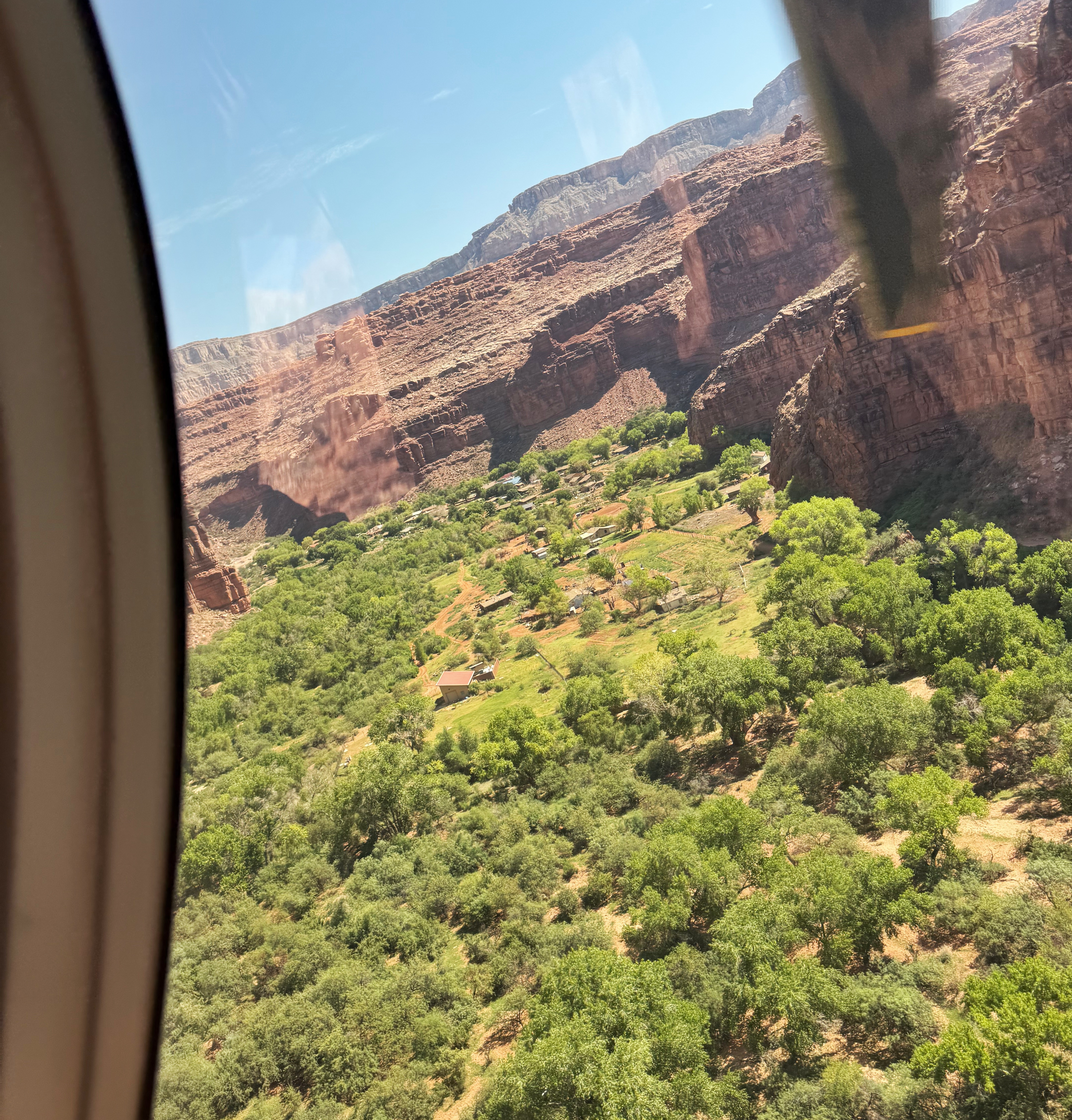
View of Supai, Ariz. from the helicopter transport.
Beyond strengthening his technical and project management abilities, the experience helped Sessions refine his career interests. After graduating, he would like to explore opportunities with the Bureau of Indian Education or another organization serving tribal communities.
Sessions’ path to Dakota State began while he was still living in Japan. A childhood friend introduced him to computers, and that interest grew through online friendships and connections with students in technology competitions.
When Sessions began researching colleges in the United States, DSU stood out for its technology-focused programs, affordability, and connected learning environment.
“In my senior year of high school, I brought a laptop to every class because I really liked doing everything online,” he said. “When I heard that every student has a laptop here and that professors put everything online, I really liked that part of it.”
Now in his senior year, Sessions is using his final semesters at DSU to continue exploring his career options. His summer in Supai confirmed that he wants to combine his technical knowledge with project management while doing work that directly helps people.
For Sessions, the internship provided more than a memorable view of the Grand Canyon. It showed him how skills developed in a DSU classroom can make a difference, even in one of the most remote communities in the United States.