
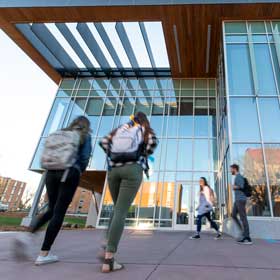
DSU students gain new perspective on poverty ahead of Thanksgiving
November 25, 2026
MADISON, S.D. — As families across the country prepare to gather around Thanksgiving tables, students at Dakota State University gained a new perspective on the challenges faced by those who struggle to put food on the table.
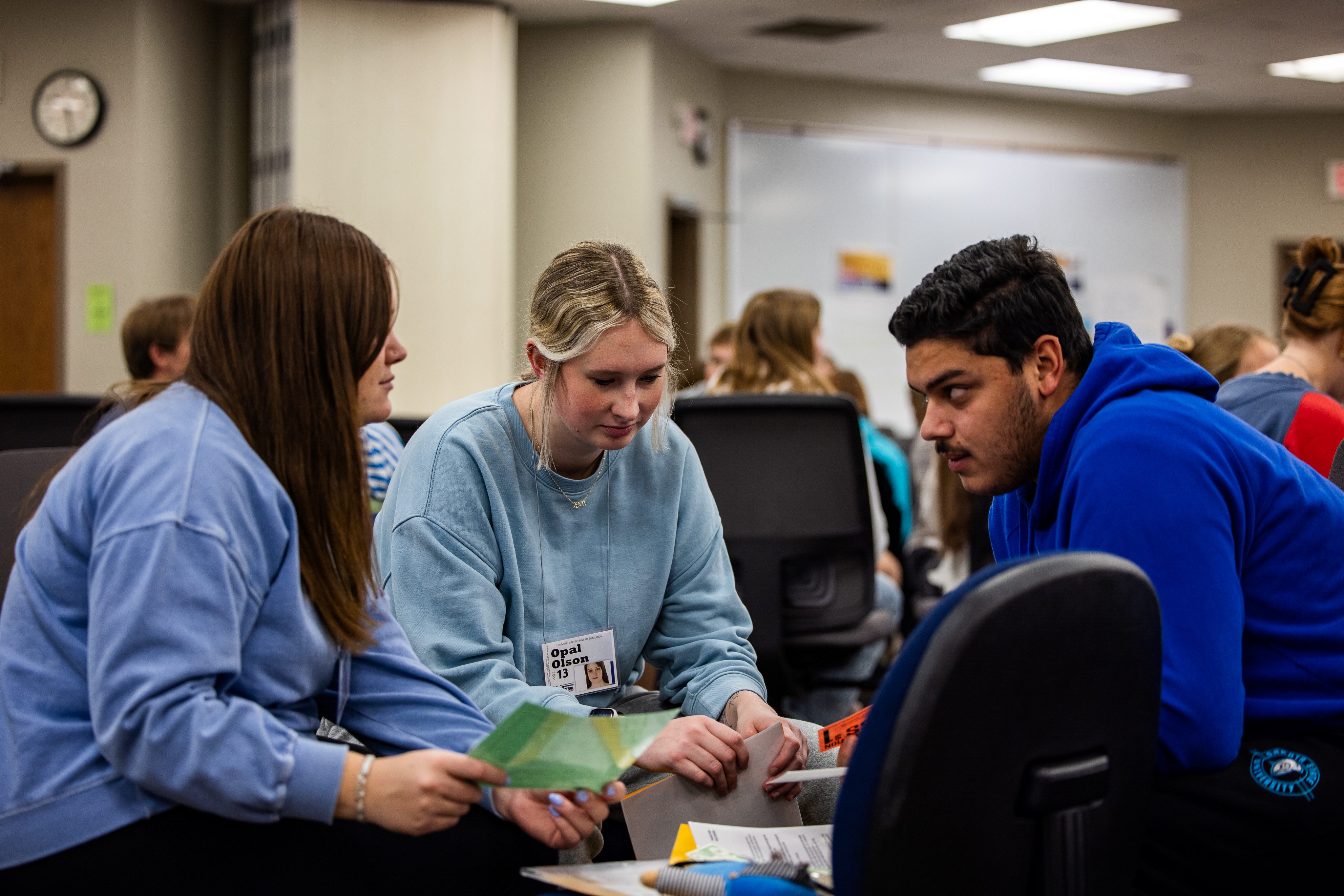
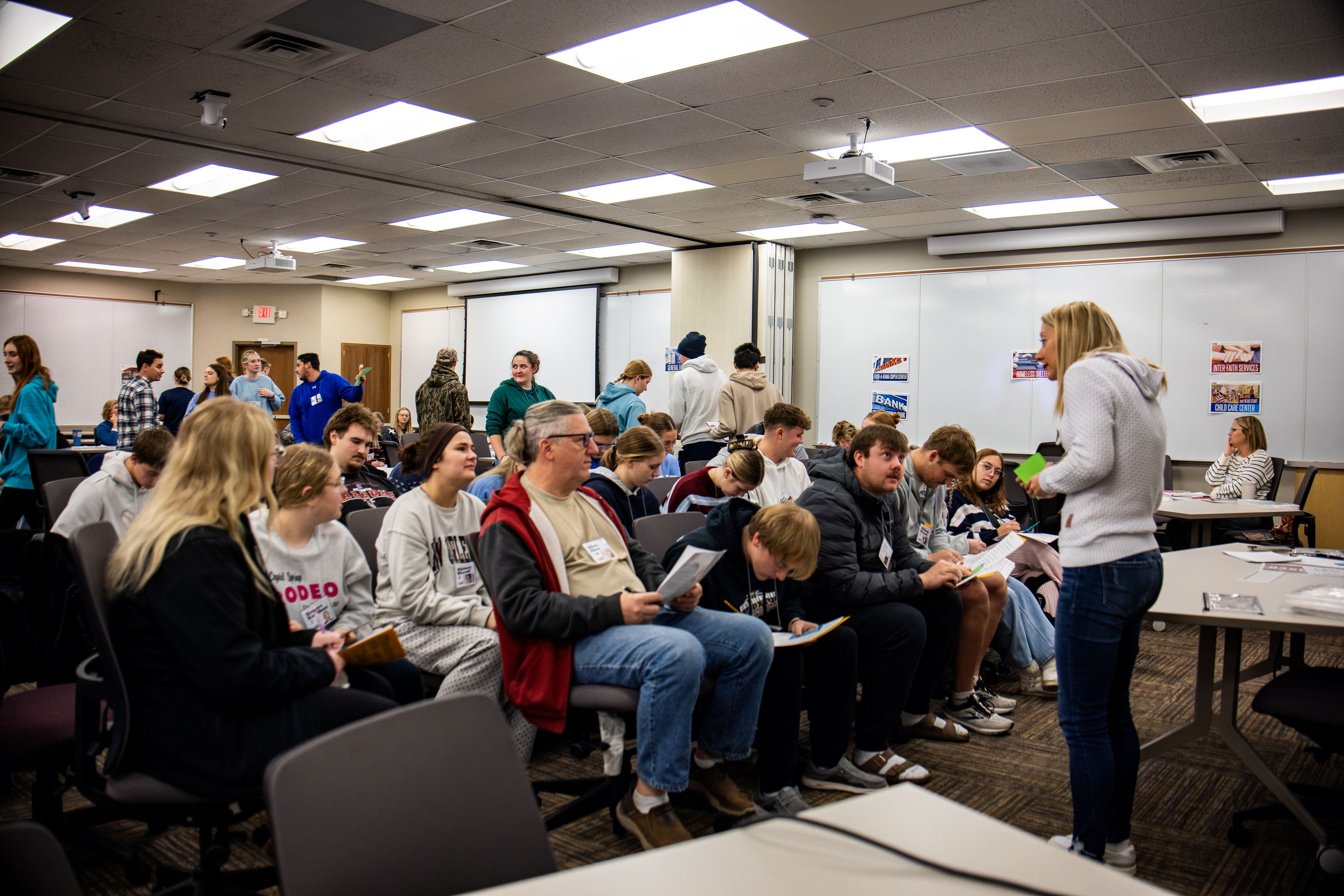
On Monday, Nov. 23, Dakota State University's College of Education and Human Performance partnered with the South Dakota Education Association (SDEA) to host a Poverty Simulation, giving students a chance to experience the difficult decisions, financial pressures, and everyday challenges families living in poverty face.
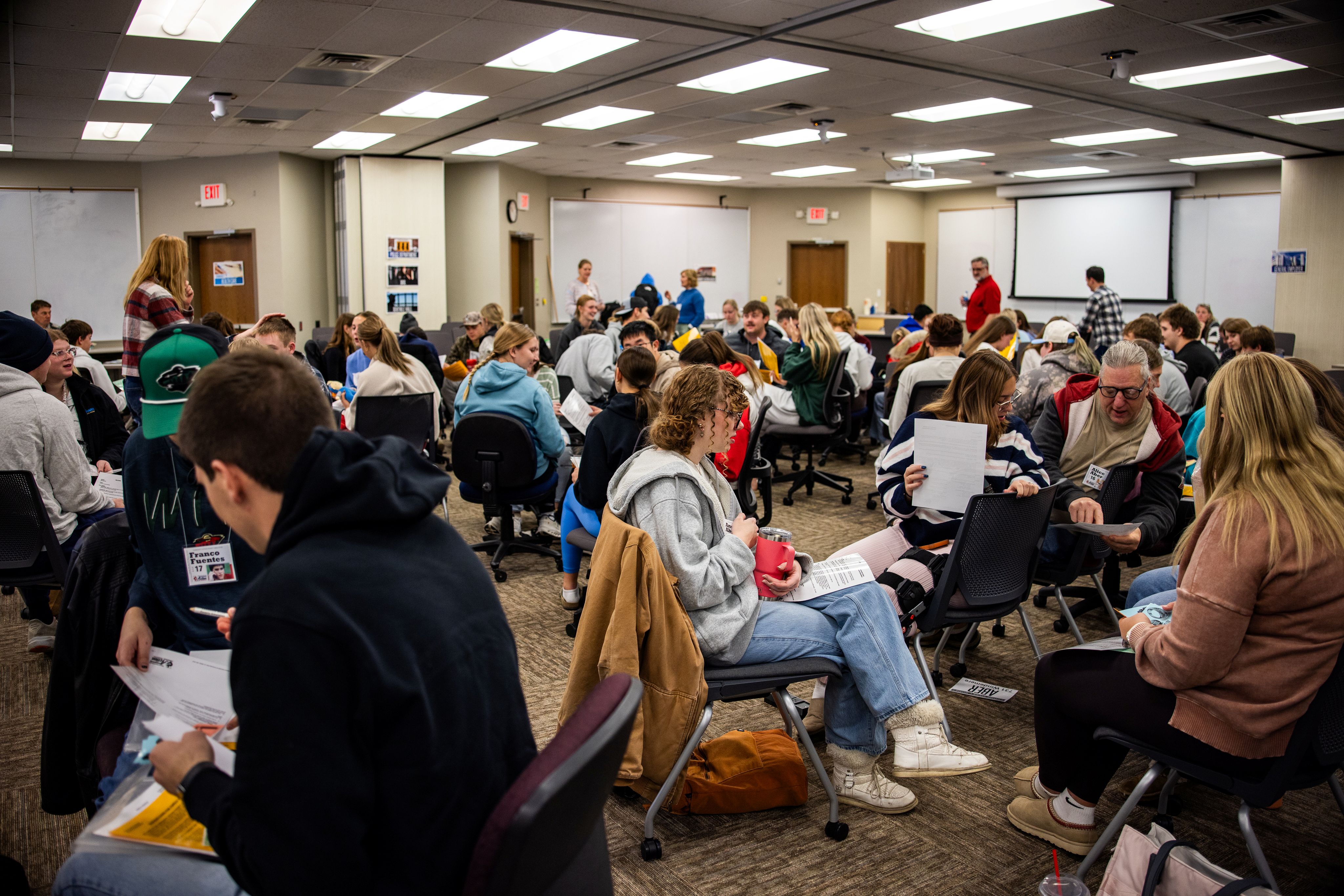
Held at DSU's Kennedy Center, the interactive experience challenged participants to navigate a simulated month in the lives of low-income families, highlighting the obstacles that can make meeting even the most basic needs difficult.
For students preparing to become teachers, the experience offered valuable lessons about empathy, understanding, and the importance of recognizing the circumstances that can affect a child's educational experience.
"Families experiencing poverty are often doing the very best they can to meet the needs of everyone in their household while navigating limited resources, difficult choices, and unexpected obstacles," said Sandi Steinhoff-Muller, instructor in DSU's College of Education and Human Performance. "For our future educators, this experience reinforces the importance of approaching students and their families with empathy rather than judgment. There are often circumstances affecting a student's life that may not be immediately visible in the classroom."
Experiencing the realities of poverty
The Community Action Poverty Simulation (CAPS) is an experiential learning program designed to increase awareness of the challenges faced by individuals and families living with limited financial resources.
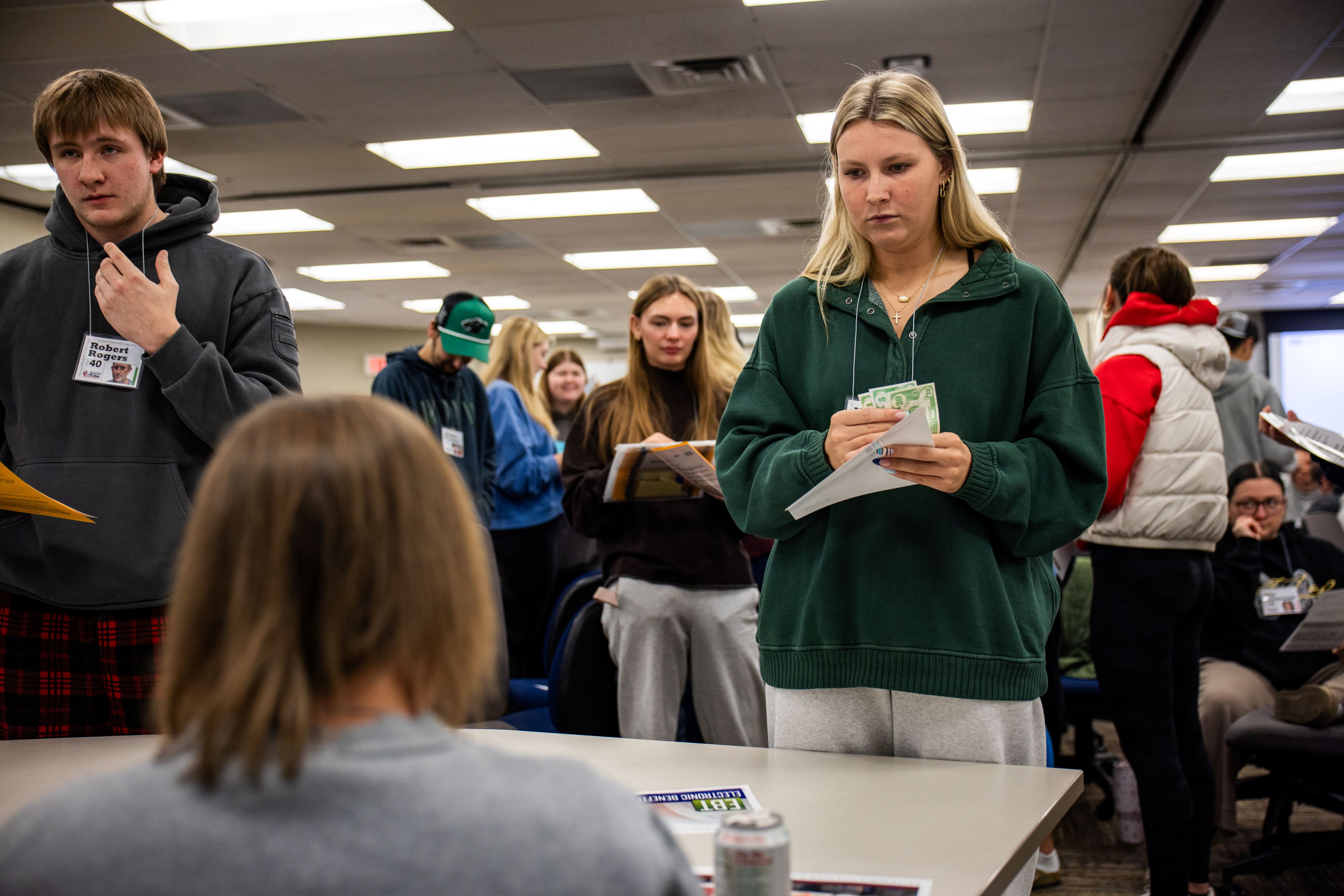
During the simulation, participants assumed the roles of family members facing a variety of circumstances, including unemployment, disabilities, limited incomes, and the challenges of raising children or supporting elderly relatives.
Over four simulated 15-minute weeks, participants worked to provide food, housing, transportation, healthcare, and other necessities while navigating unexpected expenses and competing responsibilities.
Throughout the exercise, participants interacted with simulated community resources, including grocery stores, employers, banks, social service agencies, healthcare providers, and utility companies.
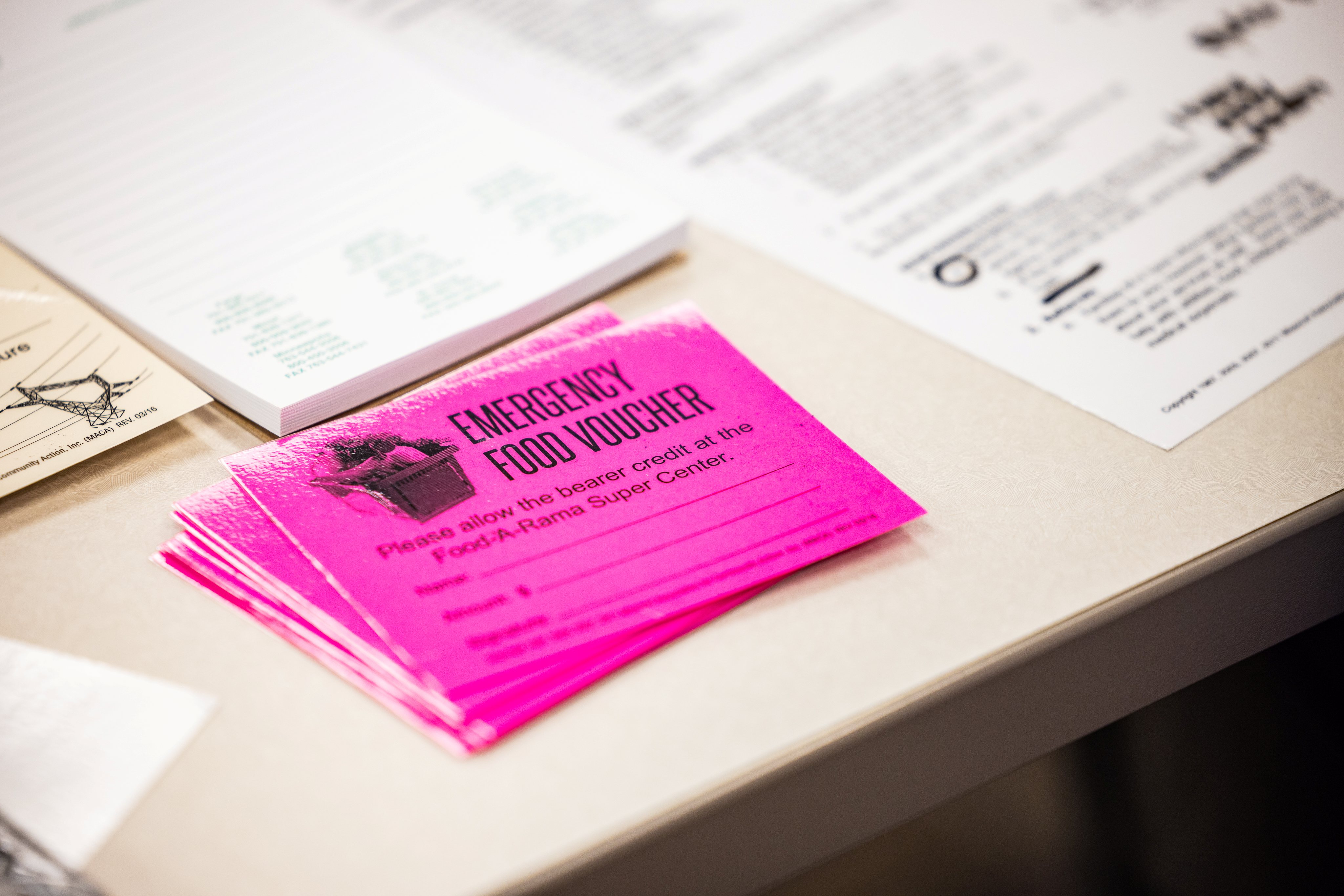
The experience demonstrated how quickly financial pressures can accumulate and how even seemingly simple tasks can become complicated by limited transportation, time constraints, and difficulty accessing available services.
"One of the most impactful aspects of the simulation was seeing how quickly stress can build when families face multiple responsibilities, limited resources, and unexpected challenges," Steinhoff-Muller said. "Participants were often surprised by how difficult it was to navigate community systems and access needed services. These experiences led to meaningful discussions about empathy, avoiding assumptions, and the critical role educators play in supporting students and families facing economic hardship."
A timely lesson in gratitude and compassion
With Thanksgiving just days away, the simulation took on added significance as participants considered how the holiday season can increase financial and emotional pressures for families already struggling to make ends meet.
While Thanksgiving is traditionally a time for gratitude, family gatherings, and shared meals, it can also highlight the challenges individuals face when they must choose between paying bills, buying groceries, or meeting other essential needs.
Those pressures can intensify as winter approaches, bringing additional expenses for heating, clothing, transportation, and holiday activities.
"Holding the poverty simulation during this time of year is particularly meaningful because the holiday season can bring additional financial pressures for many families," Steinhoff-Muller said. "While we often associate Thanksgiving and the holidays with celebrations and family gatherings, many families are making difficult decisions about how to provide those experiences while still meeting basic needs. The simulation encourages us to approach those circumstances with greater compassion, flexibility, and understanding."
The experience also encouraged participants to consider how gratitude can extend beyond appreciating what they have to recognizing others' needs and finding ways to support their communities.
For future teachers, that understanding can have a lasting impact on how they interact with students and families.
Building more compassionate classrooms
Steinhoff-Muller emphasized that the lessons learned through the simulation are particularly important for students entering the education profession.
Financial hardship can affect a family's ability to purchase classroom supplies, pay field trip fees, arrange transportation, access childcare, or participate in school activities. Even small requests from teachers, such as bringing snacks or buying classroom materials, can add burdens for families struggling to cover essential expenses.
The simulation encouraged future educators to look beyond a student's immediate circumstances and consider the broader challenges that may influence classroom performance, attendance, behavior, and family engagement.
"Something as simple as asking a family to provide classroom supplies or contribute to an activity can create additional stress when that family is already struggling to afford housing, food, and transportation," Steinhoff-Muller said. "We want our future teachers to recognize those challenges and understand the important role they can play in connecting families with resources, building supportive relationships, and creating inclusive classrooms where every student has the opportunity to succeed."
For DSU students, the lessons learned extend beyond the classroom, encouraging them to become educators who recognize the challenges their students may face and respond with understanding, empathy, and support.
"Ultimately, we hope our students leave this experience recognizing that poverty is about more than financial limitations," Steinhoff-Muller said. "It affects families in many ways, and understanding those challenges is an important step toward becoming a more compassionate educator and community member."