Professional Accountancy, BS
Program Quick Facts
Credits
150
Start Terms
Fall
|Spring
|Summer
Available
On Campus
|Online
Tuition
$8,956.50
estimated cost per semester
Go beyond accounting
Explore your interests in finance and money management to prepare for a successful career as a professional accountant. Our professional accountancy bachelor’s degree prepares students to sit for the Certified Public Accountant (CPA) exam. As an accounting major you’ll take coursework related to business, information systems, and, of course, accounting!
In South Dakota, CPA candidates are required to have 150 semester hours of college credit before taking the CPA certification test. Our degree is intentionally designed to align with this requirement. Students can choose elective credits, a second major, a minor, or a graduate degree to reach the 150 credits necessary to become a CPA.
Explore resouces from the American Institute of CPAs & Chartered Institute of Management Accountants (AICPA & CIMA) to learn more about the accounting profession, career opportunities, professional certifications, and the steps to becoming a CPA.
Flexible opportunities
Depending on your goals, timeline, learning style, and career plans, Dakota State University offers three flexible pathways to a CPA licensure. Choose which path is a good fit for your journey to public accounting, corporate finance, analytics, consulting, or entrepreneurship.
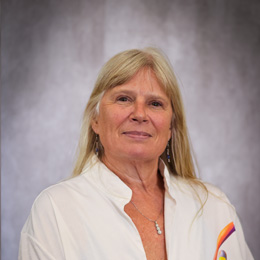
If you have any questions regarding CPA pathways, contact Scott Morstad at Scott.Morstad@dsu.edu.
CPA pathways
This pathway is best if you want advanced specialization, additional confidence, and maximum national flexibility.
Must have:
- Bachelor’s Degree (with 24-credit accounting specialization)
- Graduate Degree (or post-baccalaureate education)
- 1 year experience (supervised)
- Passed the CPA exam
This pathway is best if you are close to 150 credit hours and want flexibility while building career-ready skills with additional coursework.
Must have:
- Bachelor’s Degree (with 24-credit accounting specialization)
- Additional 30 semester credit hours (150 total credit hours)
- 1 year experience (supervised)
- Passed the CPA exam
This pathway is a good fit if you want to enter the workforce sooner, reduce education costs, and gain experience through on-the-job learning. It removes the mandatory “fifth year” requirements while maintaining professional standards through additional experience.
Must have:
- Bachelor’s Degree (with 24-credit accounting specialization)
- 2 years experience (supervised)
- Passed the CPA exam
Online or on-campus
DSU’s professional accountancy degree is available on-campus or 100% online.
This program meets the educational prerequisites for professional licensure or certification in South Dakota. DSU attempts to comply with the educational licensure requirements of locations in addition to South Dakota, and will provide up-to-date information as it becomes available on the program availability map.
On-campus and online students living in or moving to any state other than South Dakota seeking to establish CPA licensure will need to meet the unique licensure requirements for that location. Detailed information about these requirements can be found at the National Association of State Boards of Accountancy (NASBA).
A degree worthy of recognition
With real-world skills such as Microsoft Suite, QuickBooks, and tax preparation embedded into our curriculum, you’ll have a competitive edge amongst your peers. You’ll also get a solid background in various technical systems, which will help you understand, manage, and lead accounting teams.
While you’re on the road to becoming a CPA, you’ll assemble skills in organization, detail, management, taxes, and more. Our curriculum incorporates the knowledge of legal business entities, ethics and social responsibilities, and more. The business expertise you gain will enable you to go far in your field. You might even become a company’s go-to accountant.
 Build your future with an accredited degree
The professional accountancy degree at DSU is accredited by the Accreditation Council for Business Schools and Programs (ACBSP), ensuring the program meets high academic and industry standards. This accreditation reflects a commitment to quality business education and prepares you with the skills needed for a successful career in accounting.
Prepare for your future
Explore your career options with pre-professional coursework. In the professional accountancy program, you will be prepared in pre-law for admission to law school. Build skills in research, evidence-based decision-making, judgement and ethics, and more.
Business and accountancy frequently complement each other. If you want to continue your education, check out our Master of Business Administration (MBA) program.
Notable courses
This course covers the skeptical analysis of corporate financial statements including ratio, vertical, and horizontal analyses, and the interpretation of disclosure statements. Students will also learn consideration of the impact of inflation and taxes and accounting assumptions, the market impact of accounting choices, along with earnings quality and earnings management. This course includes information on mergers and acquisitions, accounting-based trading strategies, restatement and forecasting of financial statements, and accounting and auditing ethics and standards.
This course provides an understanding of the patterns of flow of accounting information in business, principles of internal control, and the use of computers in current and future accounting systems. Students will learn concepts of accounting information systems, flowcharting and analysis of manual and computerized transaction cycles, decision support systems, and electronic commerce. Students will also analyze management reporting systems, control and audit of complex computerized information systems, and the development of accounting information systems.
Involves the study of fund accounting, including reports, records, and special problems encountered by nonprofit entities and the generally accepted accounting principles related to them. Nonprofit entities include municipalities and state governments, universities, hospitals, and voluntary health and welfare organizations.
In this course students will learn about data analytics in order to evaluate data with the purpose of drawing conclusions to address business questions. This class will allow students to search through large structured and unstructured data to discover unknown patterns or relationships.
This course develops skills in tax compliance and planning and prepares students for consulting in various tax topics. Students will learn about individual tax and financial planning as well as entity tax compliance, business entity tax planning, and property transactions.
Faculty
Use the Next and Previous buttons to page through faculty profiles. Use Tab to move through currently displayed profiles.